
Government is also will also enter into an agreement with Japan for a $50 billion swap.
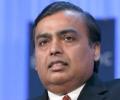
Media has raised the issues that new pricing to benefit Reliance Industries.

The rupee depreciated 7 paise to an all-time low of 80.05 against the US dollar in early trade on Tuesday tracking the strength of the American currency and firm crude oil prices. At the interbank foreign exchange, the rupee opened at 80 against the American dollar, then lost ground to quote at 80.05, registering a fall of 7 paise from the last close. In initial trade, the local unit also touched 79.90 against the American currency.

You can't go through life without a jar of South Indian tomato chutney in the you fridge.
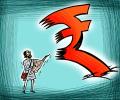
Indian rupee, which earlier this week touched an all-time low, is likely to remain under pressure and may test new levels as a fallout of the US Federal Reserve indicating more interest rate hikes, experts said. The aggressive rate hikes will dampen demand and increase the possibility of a recession in the US. This could accelerate the pace of capital outflows, weaken the rupee and raise the threat of imported inflation.

The government will release revised growth estimates for the current financial year by the end of June.
The Consumer Price Index-based inflation rose to 5.11% in January

tailwinds of a remarkable year and handsome investor returns, Indian equities are set for an eventful journey in 2024, with a slew of local and global cues -- varying from interest rates to Lok Sabha polls to geopolitical happenings. Analysts are of the view that the bull run in the domestic equity market will continue, and over the next 3-6 months, the benchmark indices -- Sensex and Nifty -- could climb up to 7 per cent. In 2023, the 30-share BSE Sensex jumped 11,399.52 points or 18.73 per cent, and the NSE Nifty climbed 3,626.1 points or 20 per cent.

In the Sensex pack, Asian Paints, Larsen & Toubro, Titan, IndusInd Bank, Bharti Airtel, Power Grid, Bajaj Finserv, Infosys, HDFC Bank and HDFC were the major laggards. On the other hand, Axis Bank, Tata Motors, ITC, State Bank of India, Tata Steel and Sun Pharma were among the gainers.

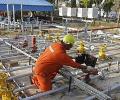
This means lower losses on fuel sales by Indian oil companies and a shrinking oil subsidy bill for the government.
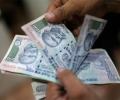
Weak equity markets too hit rupee sentiment
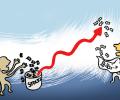
In a dazzling resurgence, foreign investors have graced the Indian equity markets with an influx of nearly Rs 1.5 lakh crore in 2023, fuelled by optimism over the country's resilient economic fundamentals amid shadows of a gloomy global scenario. Experts believe that the positive trend may continue in 2024. This follows Indian equities witnessing the worst-ever net outflow of Rs 1.21 lakh crore by FPIs in 2022 on aggressive rate hikes by the central banks globally after net inflows for three consecutive years.

It's the ultimate recipe to try with tomato prices skyrocketing.

Exports in January 2014 stood at $26.89 billion.

Wholesale price-based inflation spiked to a record high of 15.08 per cent in April on rising prices across segments from food to commodities. The WPI-based inflation was 14.55 per cent in March and 10.74 per cent in April last year. "The high rate of inflation in April 2022 was primarily due to rise in prices of mineral oils, basic metals, crude petroleum & natural gas, food articles, non-food articles, food products and chemicals & chemical products etc. as compared to the corresponding month of the previous year," the commerce and industry ministry said in a statement.

Benchmark Sensex pared early losses to close 242 points higher while Nifty settled above the 18,000-mark on Wednesday following gains in IT, oil and select banking stocks amid mixed global trends. Extending gains for a second day, the 30-share BSE Sensex advanced 242.83 points or 0.40 per cent to close at 61,275.09 with 20 of its constituents ending in the green. The index opened lower at 60,990.05 but later regained foot to touch a high of 61,352.55 in day trade.

Old timers in Oil and Natural Gas Corporation (ONGC) still remember how in early 2000 its overseas subsidiary, ONGC Videsh Ltd (OVL), was on the verge of closure. Though OVL was set up in 1965, the only discovery the company had made till then was in Vietnam offshore, with more investment needed to monetise it. In 2001, when OVL started looking for new blocks abroad, the company's previous acquisition was 13 years old.

Among Sensex shares, HDFC Bank fell the most by 2.58 per cent, followed by SBI (2.12 per cent), HDFC (2.09 per cent), and IndusInd Bank (2.02 per cent). Axis Bank, Bajaj Finserv, M&M, L&T, Reliance, Infosys and TCS were among the major losers. In contrast, Tata Motors, Maruti, NTPC, Sun Pharma, Power Grid and Titan were among the gainers.

India's current account deficit (CAD) is likely to ease to 4.4 per cent of the GDP in the current fiscal year on lower oil and gold prices, Bank of America Merrill Lynch (BofA-ML)said in a research note.

At a time when the BJP's stars are at the top on the eve of the Lok Sabha polls, the Puri-Joshimath Sankaracharyas may have kick-started a row whose efforts might be to divide Hindus, not in the name of castes, but on what passes for greater belief, observes N Sathiya Moorthy.

The decision by the Union government and the Reserve Bank of India to infuse Rs 1,25,000 crore (Rs 1,250 billion) into the banking system in the last two weeks alone is unlikely to fuel inflation, say economists, since this infusion will only meet the basic demand and not lead to a spillover.

A sharp rally in domestic stocks from June lows has once again rendered Indian markets expensive to their emerging-market (EM) peers. The 12-month forward price-to-earnings (P/E) multiple for the Nifty50 Index is around 20.6x - 82 per cent higher than 11.3 per cent for the MSCI EM Index. India's valuation premium has hit a five-month high. This is on the back of sharp outperformance to EM and global peers from June lows and also due to earnings downgrades, following the April-June quarter of 2022-23 earnings.

The real benefits can be seen when prices stabilise, preferably at levels acceptable to both consumers and producers.

The UP minister condemned the terror attack as unfortunate and reportedly said that "European countries can't be lit up with the ill-gotten wealth from the oil reserves of Middle East".

Stock markets this week would take cues from global trends, the announcement of domestic macroeconomic data such as GDP numbers and foreign fund movement, analysts said. Besides, monthly auto sales and Purchasing Managers' Index (PMI) data for manufacturing and services sectors would also influence trading in the market, they added. Benchmark BSE Sensex tumbled 1,538.64 points or 2.52 per cent last week amid concerns that the US Federal Reserve might raise interest rates further to curb inflation.
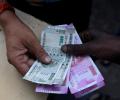
'As long as economic growth remains steady, creating jobs and generating stable incomes, the rise in home loans should not create problems.' 'If the growth trajectory changes course over the medium term and interest rates rise along with inflation, the expanding trend in home loans may not sustain.'

The government on Monday ruled out making public the RBI report detailing the reasons why the central bank could not keep inflation within the targeted 6 per cent upper limit for the three consecutive quarters. "Yes sir, RBI has furnished a report to the central government, as mandated under Section 45ZN of the RBI Act, 1934 and Regulation 7 of RBI Monetary Policy Committee and Monetary Policy process Regulations, 2016," minister of state for finance Pankaj Chaudhary said in a written reply. The said provisions of the RBI Act, 1934, and regulations therein does not provide for making the report public, he said.

Capital expenditure by 54 large central public sector enterprises and five departmental arms, having a capex minimum target of Rs 100 crore, rose 93 per cent year-on-year (YoY) in the April-May period to Rs 1.39 trillion. The National Highways Authority of India (NHAI) and the Railways have started this financial year's capex cycle on a stronger note. In the first two months of FY24, the 54 CPSEs, along with the departmental arms, achieved 19 per cent of their combined budget target of Rs 7.33 trillion, Business Standard has learnt.
The Reserve Bank of India on Thursday said that the economy had enough resilience to absorb rise in global oil prices and said it is keeping a close watch on inflation.
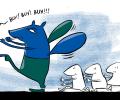
Smaller stocks have emerged as Dalal Street's favourites in 2023 that has turned out to be a "great year" for equities, rewarding investors with big gains, driven by optimism over the country's macroeconomic fundamentals and heavy retail investors participation. Experts said equity markets are experiencing a prolonged bull run and it is during this time that the midcap and smallcap segments tend to outshine their larger counterparts. Till December 22 this year, the BSE smallcap gauge has jumped 13,074.96 points or 45.20 per cent while the midcap index has surged 10,568.18 points or 41.74 per cent.

UltraTech Cement was the biggest gainer in the Sensex chart, climbing 3.13 per cent, followed by Kotak Mahindra Bank, Tata Motors, Axis Bank, Maruti, Bajaj Finserv, Bajaj Finance and Mahindra & Mahindra. In contrast, Infosys, Tech Mahindra, Tata Consultancy Services, Wipro, Bharti Airtel, HCL Technologies, ICICI Bank and Nestle were among the laggards.

'We are in a sweet spot.' 'Equity, on a standalone basis, will continue to remain the asset class to stay invested in.'

'Midcap and smallcap indices are trading in the expensive zone.'

'We are engaging in substantial open market sales of both wheat and rice to control food inflation; special measures of market intervention in vegetables, pulses and oil seeds were also taken to cushion the impact.'

If the pitch gets hampered then the match officials will assess the pitch and see whether it is in good condition to play or not if yes they will continue playing on the same and if not then they will look at the other pitch condition and take a call on whether they can play on the other one or not, according to ANI.

Elections may be a few months away, but the government may get into election mode much earlier than that, predicts A K Bhattacharya.

The IOC share sale is the fourth disinvestment this fiscal but the biggest in 2015-16 so far.

M&M was the biggest loser in the Sensex chart, falling 6.39 per cent, followed by Tech Mahindra, Nestle India, Bajaj Finance, Axis Bank, ITC, JSW Steel, HDFC Bank and RIL. On the other hand, Sun Pharma, Tata Motors, Bharti Airtel, L&T and Infosys were among the winners, rising up to 2.10 per cent.

RIL may go to arbitration which may lead to further delay in production and extra cost associated with the arbitration.
